|
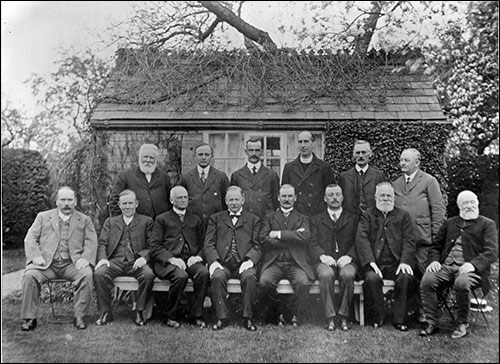
The ‘Church v Chapel’ rivalry, prevalent around the turn of the century extended to membership of the early Parish Council. For example, the 1900 election was contested by candidates who described themselves as ‘Church’ or ‘Nonconformist’ candidates. The successful churchmen included the curate, two farmers, a mason, the church school headmaster and a quarry manager. The nonconformists were the Baptist minister, two boot and shoe manufacturers, a farmer, coal merchant and flour mill owner. The District Council election was held at the same time, resulting in a nonconformist candidate, a Friendly Society candidate and church candidate being elected and a nonconformist losing his seat.
Whatever their allegiance, the men who managed our affairs at that time were responsible for encouraging the great changes taking place in Burton Latimer. In addition to the hundreds of houses that were being built, many significant public buildings and factories were erected in the late 1800s and early 1900s: the Whitney & Westley shoe factory in Finedon Street, the Hart & Levy clothing factory in Bakehouse Lane; the Board (later Council) School, the cinema, the coffee house, Britannia Club and Cottage Homes, all in the High Street; St. Crispin’s Hall off Church Street, the Mission Church and infants school on the corner of Higham Road and Finedon Road. The Methodist Chapel was built in Duke Street and opposite it was built the fire station with accommodation for the Parish Council in rooms above. The first Co-operative Society shop was built in
Duke Street
in 1888, followed in 1913 by additional offices and shops in the High Street. The Constitutional Hall was built opposite the Wagon & Horses in Kettering Road, the Pavilion opposite the Red Cow, and there was a large corrugated iron and timber room in Alexandra Street and another attached to the Band Club in the High Street that were used for band practices and meetings.
With the exception of the fire station and council offices, all of the above were built by private enterprise or by the District Council, but the Parish Council, established in 1894, had members with great influence who also sat on the District or County Councils. The Electric Palace cinema and the Pavilion were both built by businessman councillors with their ‘private enterprise’ hats on.
Below is a list of Chairmen, where known, of the Parish Council (from 1894), the Urban District Council (from 1924) and from Burton Latimer Town Council (from 1974)
| Parish Council |
1894/95 |
Thomas |
COLLINGS |
| Parish Council |
1895/96 |
Thomas |
COLLINGS |
| Parish Council |
1896/97 |
Thomas |
COLLINGS |
| Parish Council |
1897/98 |
Thomas |
COLLINGS |
| Parish Council |
1898/99 |
Thomas |
COLLINGS |
| Parish Council |
1899/1900 |
Revd. Harold |
PRIESTLAND |
| Parish Council |
1900/01 |
Charles |
BARLOW |
| Parish Council |
1901/02 |
Charles |
BARLOW |
| Parish Council |
1902/03 |
Charles |
BARLOW |
| Parish Council |
1903/04 |
Charles |
BARLOW |
| Parish Council |
1904/05 |
Charles |
BARLOW |
| Parish Council |
1905/06 |
Charles |
BARLOW |
| Parish Council |
1906/07 |
Charles |
BARLOW |
| Parish Council |
1907/08 |
Charles |
BARLOW |
| Parish Council |
1908/09 |
Charles |
BARLOW |
| Parish Council |
1909/10 |
Charles |
BARLOW |
| Parish Council |
1910/11 |
Charles |
BARLOW |
| Parish Council |
1911/12 |
Charles |
BARLOW |
| Parish Council |
1912/13 |
Charles |
BARLOW |
| Parish Council |
1913/14 |
Charles |
BARLOW |
| Parish Council |
1914/15 |
Fred Taylor |
FREESTONE |
| Parish Council |
1915/16 |
Alfred |
BARRATT |
| Parish Council |
1916/17 |
Alfred |
BARRATT |
| Parish Council |
1917/18 |
Joseph |
BOARDMAN |
| Parish Council |
1918/19 |
James A |
WALLIS |
| Parish Council |
1919/20 |
A C |
HARRIS |
| Parish Council |
1920/21 |
James |
BUCKBY |
| Parish Council |
1921/22 |
James |
BUCKBY |
| Parish Council |
1922/23 |
Edward |
BAILEY |
| Parish Council |
May-Oct 1923 |
Joseph |
BOARDMAN |
| Urban District Council |
Oct 23 -May 24 |
J Wallace |
COLES |
| Urban District Council |
1924/25 |
J Wallace |
COLES |
| Urban District Council |
1925/26 |
Albert E |
FOX |
| Urban District Council |
1926/27 |
Arthur G |
MILLER |
| Urban District Council |
1927/28 |
Louis H |
LETHBRIDGE, Revd |
| Urban District Council |
1928/29 |
Stephen |
MASON |
| Urban District Council |
1929/30 |
Oliver |
TAILBY |
| Urban District Council |
1930/31 |
R B (Bobby) |
POWNALL |
| Urban District Council |
1931/32 |
Frank |
BARLOW |
| Urban District Council |
1932/33 |
Archibald C |
HARRIS |
| Urban District Council |
1933/34 |
Oliver |
TAILBY |
| Urban District Council |
1934/35 |
Arthur G |
MILLER |
| Urban District Council |
1935/36 |
R B (Bobby) |
POWNALL |
| Urban District Council |
1936/37 |
Archibald C |
HARRIS |
| Urban District Council |
1937/38 |
Alfred |
BARLOW |
| Urban District Council |
1938/39 |
J W (Jack) |
PATRICK |
| Urban District Council |
1939/40 |
R B (Bobby) |
POWNALL |
| Urban District Council |
1940/41 |
R J (Bob) |
MACKINTOSH |
| Urban District Council |
1941/42 |
Archibald C |
HARRIS |
| Urban District Council |
1942/43 |
Oliver |
TAILBY |
| Urban District Council |
1943/44 |
R J (Bob) |
MACKINTOSH |
| Urban District Council |
1944/45 |
Albert V |
MORLEY |
| Urban District Council |
1945/46 |
B W (Bob) |
PHILLIPS |
| Urban District Council |
1946/47 |
A.G. |
MILLER |
| Urban District Council |
194748 |
Len |
PATRICK |
| Urban District Council |
1948/49 |
Ernest E |
CLIPSON |
| Urban District Council |
1949/50 |
B W (Bob) |
PHILLIPS |
| Urban District Council |
1950/51 |
Edith C |
PECK, Mrs |
| Urban District Council |
1951/52 |
Reg S |
HORN |
| Urban District Council |
1952/53 |
R J (Bob) |
MACKINTOSH |
| Urban District Council |
1953/54 |
Len |
PATRICK |
| Urban District Council |
1954/55 |
Dennis |
LONG |
| Urban District Council |
1955/56 |
George |
WARD |
| Urban District Council |
1956/57 |
Edith C |
PECK, Mrs |
| Urban District Council |
1957/58 |
Kathline M |
BURROWS, Mrs |
| Urban District Council |
1958/59 |
Douglas J |
ASHBY |
| Urban District Council |
1959/60 |
Douglas J |
ASHBY |
| Urban District Council |
1960/61 |
Robert J |
MACKINTOSH |
| Urban District Council |
1961/62 |
George |
WARD |
| Urban District Council |
1962/63 |
Margaret E O |
GARDNER, Mrs |
| Urban District Council |
1963/64 |
Peter J |
TOSELAND |
| Urban District Council |
1964/65 |
Len |
PATRICK |
| Urban District Council |
1965/66 |
Arthur F |
MUTLOW |
| Urban District Council |
1966/67 |
Jack |
STOKES |
| Urban District Council |
1967/68 |
R W H (Dick) |
COOPER |
| Urban District Council |
1968/69 |
Albert A |
MORBY |
| Urban District Council |
1969/70 |
J Colin |
MACKINTOSH |
| Urban District Council |
1970/71 |
Albert A |
MORBY |
| Urban District Council |
1971/72 |
Roland A |
BARLOW |
| Urban District Council |
1972/73 |
Douglas J |
ASHBY |
| Urban District Council |
1973/74 |
John |
MEADS |
| Town Council |
1974/75 |
J Nicholas |
LOAKE |
| Town Council |
1975/76 |
Maurice |
PATRICK |
| Town Council |
1976/77 |
R W H (Dick) |
COOPER |
| Town Council |
1977/78 |
June E |
SMITH, Mrs |
| Town Council |
1978/79 |
Christopher J |
GROOME |
| Town Council |
1979/80 |
Peter C |
JOHNSON |
| Town Council |
1980/81 |
Albert A |
MORBY |
| Town Council |
1981/82 |
Douglas J |
ASHBY |
| Town Council |
1982/83 |
Marion |
YORK, Mrs |
| Town Council |
1983/84 |
John |
MEADS |
| Town Council |
1984/85 |
Davina |
MILLS, Mrs |
| Town Council |
1985/86 |
June E |
SMITH, Mrs |
| Town Council |
1986/87 |
Christopher J |
GROOME |
| Town Council |
1987/88 |
James L C |
AVELING |
| Town Council |
1988/89 |
Albert A |
MORBY |
| Town Council |
1989/90 |
Joan Y |
GRIFFITHS, Mrs |
| Town Council |
1990/91 |
David E |
DAVIES |
| Town Council |
1991/92 |
Raymond G |
BRYCE |
| Town Council |
1992/93 |
Marion |
YORK, Mrs |
| Town Council |
1993/94 |
Roger W ("Bo") |
PATRICK |
| Town Council |
1994/95 |
John D |
CUTMORE |
| Town Council |
1995/96 |
Stephen K |
THOMAS |
| Town Council |
1996/97 |
Albert A |
MORBY |
| Town Council |
1997/98 |
Joan Y |
GRIFFITHS, Mrs |
| Town Council |
1998/99 |
John L |
LOASBY |
| Town Council |
1999/2000 |
John D |
CUTMORE |
| Town Council |
2000/01 |
Robert L |
FIELD |
| Town Council |
2001/02 |
Sheila M |
WALDEN, Mrs |
| Town Council |
2002/03 |
Marion |
YORK Mrs |
| Town Council |
2003/04 |
John D |
CUTMORE |
| Town Council |
2004/05 |
Derek G |
ZANGER |
| Town Council |
2005/06 |
Derek G |
ZANGER |
| Town Council |
2006/07 |
Michelle S |
EVANS, Ms |
| Town Council |
2007/08 |
Michelle S |
EVANS, Ms |
| Town Council |
2008/09
|
Derek G |
ZANGER |
|
Town Council
|
2009/10
|
Jan
|
SMITH, Mrs.
|
|
Town Council
|
2010/11
|
Maureen
|
JERRAM, Mrs.
|
|
Town Council
|
2011/12
|
Fergus
|
MACDONALD
|
|
Town Council
|
2012/13
|
Christopher J.
|
GROOME
|
|
Town Council
|
2013/14
|
Roger G.
|
KNIGHT, Canon
|
|
Town Council
|
2014/15
|
Ruth
|
GROOME, Mrs.
|
|
Town Council
|
2015/16
|
John
|
CURRALL
|
|
Town Council
|
2016/17
|
Nigel
|
PADGETT
|
|
Town Council
|
2017/18
|
Fergus
|
MACDONALD
|
|
|