|
|||||||||||||||||||||||||||||||||||||||||||||||||||||||||||||||||||||||||||||||||||||||||
| Article researched and presented by Margaret Craddock |
|||||||||||||||||||||||||||||||||||||||||||||||||||||||||||||||||||||||||||||||||||||||||
|
|||||||||||||||||||||||||||||||||||||||||||||||||||||||||||||||||||||||||||||||||||||||||
|
|||||||||||||||||||||||||||||||||||||||||||||||||||||||||||||||||||||||||||||||||||||||||
|
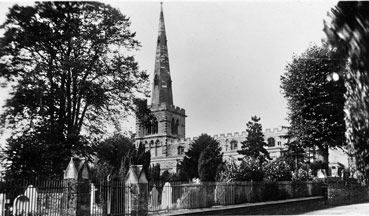
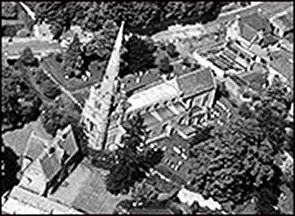
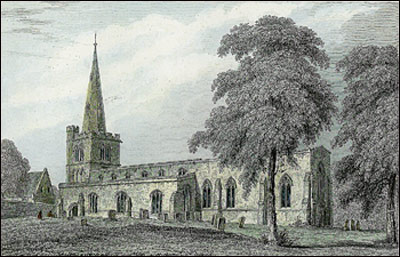
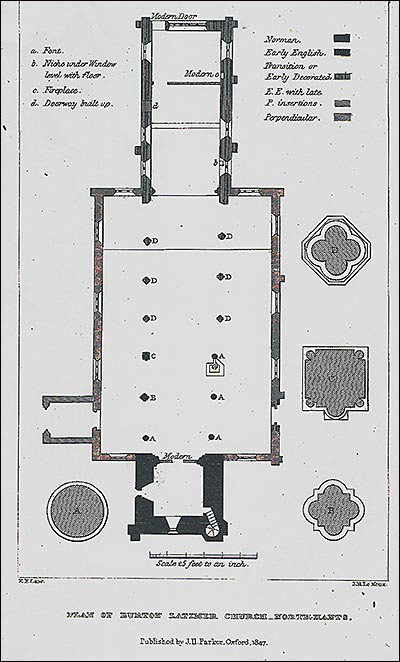
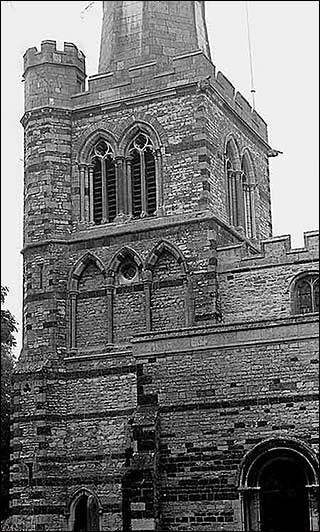
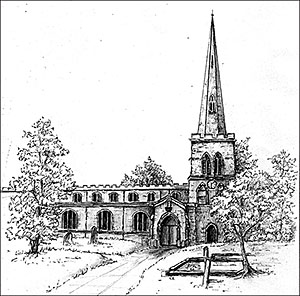
The Parish Church of St Mary is the principal glory of the town. Even in a county famed throughout the world for its lovely churches, this beautiful building is outstanding. Surrounded by ornamental trees and standing well back from the road, its position is excellent, proving once again the wisdom of the ancient builder, who not only fashioned jewels but knew how to set them. (Click here to identify St Mary's on the Town Trail) It is a large and very handsome edifice in the Norman and Early English styles and is large and shapely, with a battlemented tower and a graceful spire. The church consists of a tower and spire, north and south aisles, chancel and north porch, all constructed of local stone. The foundations of the present church are
The best professional advice was sought. When it came it ran, briefly to this effect: ‘take the spire carefully down, rebuild the tower from the foundations and then replace the spire but don’t attempt any repairs of the church until the tower and spire have been securely re-erected; the case admits of no delay.’
The Tower
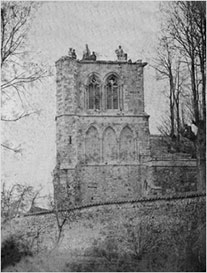
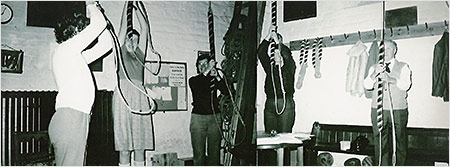
Of three storeys the tower is pierced on the north by a later door of Decorated character (14th century) while the tower throughout is Early English (13th century). In the south west corner of the tower is the original Early English doorway (now blocked up) that led to the tower staircase. The tower houses a clock and a fine peal of eight bells. When the repairs were carried out to the tower in 1862, the bells were lowered and could no longer be rung from the first floor of the belfry. The repairs were necessary because large cracks had appeared in the stonework of the tower. Mr John Henson, a Kettering builder, was employed to take it down stone by stone and then rebuild it.
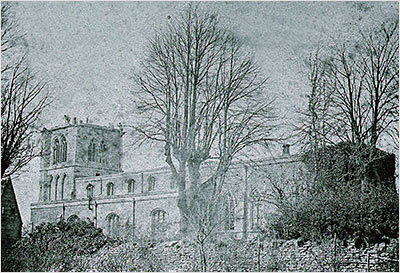
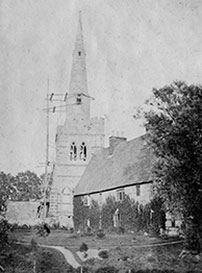
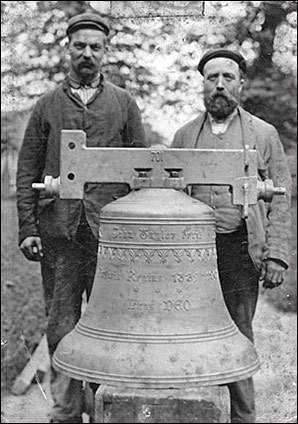
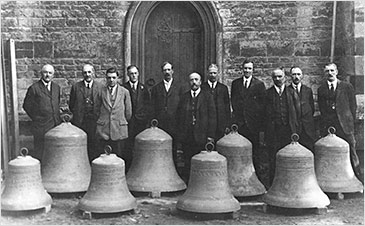
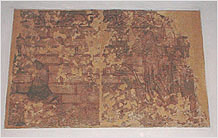
The middle picture shows the wall that existed to the south of the church before the churchyard was extended in 1880. The final picture shows the front of the Manor House before a new gabled entrance was added in the 1920's. The bells are inscribed as follows (translated from Latin): 1st (treble) Taylor Loughboro 1920. They gave their life for church and country. Father and son. WBJ 1913 EWRJ 1916 Praise be to God. 2nd Taylor Loughboro. On earth peace to men of goodwill:1920 3rd John Taylor. Founder. Queen
4th Jesus of Nazareth, King of the Jews; O Son of God Have mercy on me. 1920 5th O Christ the King of Heaven, May this sound be pleasing to thee. J Paine & H Bull. CWT & J Eayre 1718 6th (inscription as for 5th) 1619 7th (inscription as for 4th) 1619 8th (Tenor) (inscriptions for 4th) William Stear & John Payne C W.1749 T Eayre Kett: Founder A Peal of Bells was rung on 25 September 1920 to dedicate the restored and re-hung bells in Commemoration of Peace. (Click here for article on special peal of bells for Revd R W Sharpley's 25 year anniversary) (Click here for article on appeal for funds to repair 335-year-old bell in the 1970s)
Tower Room This was created in 2000 by installing a floor to provide a first floor Ringing Chamber with the Tower Room located below – known as the Janet Harpur Room in memory of Janet Harpur a faithful worshipper at St Mary’s who cared about the needs of children in a variety of ways. The room is designed for use as a crèche during services. North Porch
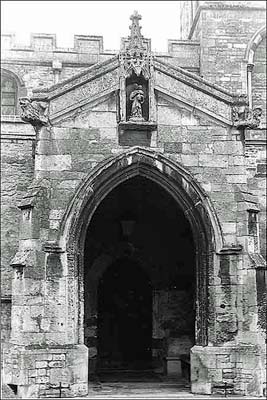
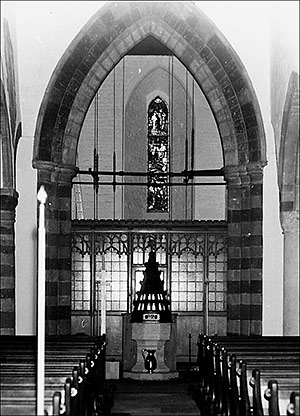
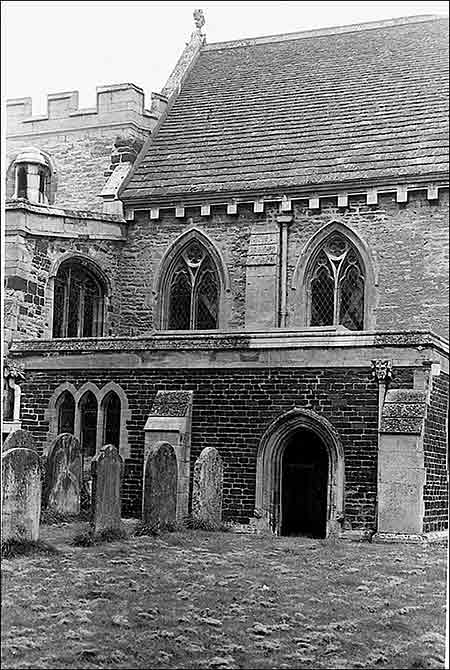
The porch is Perpendicular (15th century) with angle buttresses and a pointed and heavily studded door bearing the date 1510 and the names of JHON CAMPYON AND JHONE HYS WYF cut on them. The timbered porch was stripped and re-roofed in 1930 due to the ravages of the Death Watch beetle. Above the porch entrance is a niche, which now contains a statue of the Madonna and Child, presented by the school children in 1921. This probably replaces one destroyed during the Commonwealth. In the corner of the porch a 13th century font has been placed after its discovery forming part of a rockery in the old rectory garden. South Door This door is round headed and of the early 13th century. On the south wall remains can be seen of a mediaeval scratch dial. Font The 15th/16th century font is plain and is used for Baptisms. The font canopy is relatively modern and replaced an old one of which only a description remains. The font was moved from its former position against the third pillar on two steps between the south aisle and the nave to below the tower arch and moved again in 1972 to its present position.
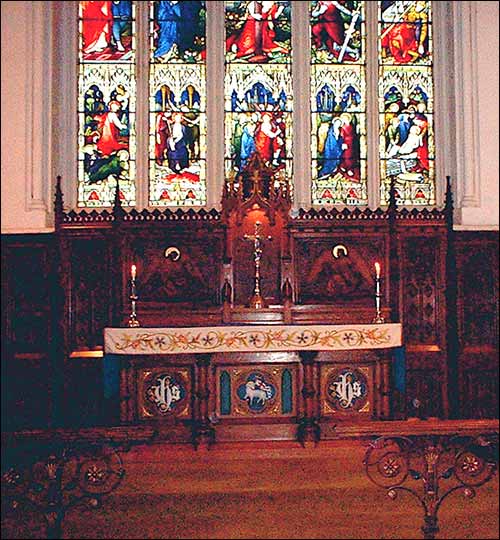
Chancel The chancel is late Early English about 1280. The East window is of 1867 but the side windows are late 13th century, Y-tracery with foiled circles. The carved oak reredos, altar and panelling date from 1897 and were designed by Mr Dunstan Powell, grandson of the famous Pugin – perhaps the greatest ecclesiastical architect and adviser of that century. Mr Powell, a partner of the firm of Hardman & Co of
Nave This consists of six bays and a half, the tower touching on what would have been the seventh bay westward, half of the arch of which becomes a flying buttress to the tower. The strange nook-shafted respond in the north arcade and the shape of the pier to which it belongs, is evidence of the transept of a cruciform Norman church. Only thus can it be explained that there are two nook-shafts with stiff leaf capitals to the north and a round arch to the east. To this cruciform Norman church of which no actual feature remains, a south arcade was added still in the 12th century, and of that there are two and a half arches from the west. On the south side are circular piers, square capitals with many scallops and one with upright leaves, the arches from the west unmounded, then with a thin angle roll, then with zig-zag. The north arcade also with a half arch follows in the early 13th century. One pier is circular with a circular stiff leaf capital and the next is square with four demi-shafts and stiff leaf. The third arch on each side taking its western spring from a Norman pier rests on the east on an Early English one of totally different section, the arch itself being not Early English, but Norman. The south side displays a character most striking, for the arch thus supported between a Norman and Early English pier is intensely
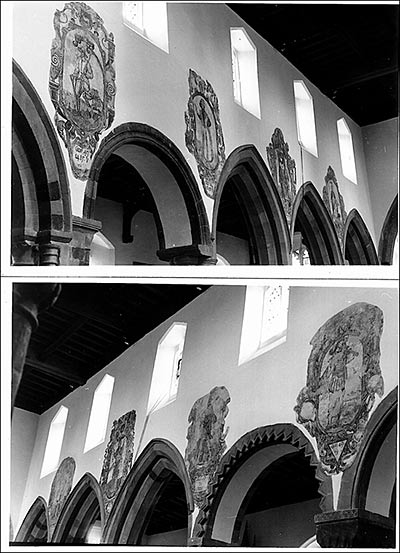
About 1280 the former Norman chancel was taken into the nave and the arcades were correspondingly lengthened. This would account for the evidence that at the place where the old and new structures unite, an arch on each side has been underbuilt. On the third pillar of the north aisle is a grotesque face. It is a “Green Man’ – a popular feature of many churches. Wall Paintings Above the pillars in the base of the arches are some remarkable wall paintings, almost complete, dating from 1600 and originally representing twelve patriarchs of the Old Testament. Ten remain complete representing Jacob’s blessing of his sons, Judah with his sceptre on a throne, Issachar with a spade, a scythe and a heavily laden horse. Reuben as a fisherman, Nephthali fleet of foot as a hind let loose, and Benjamin dividing the spoils.
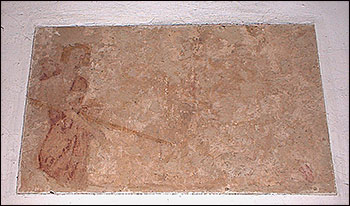
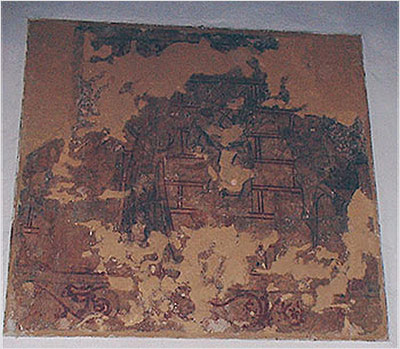
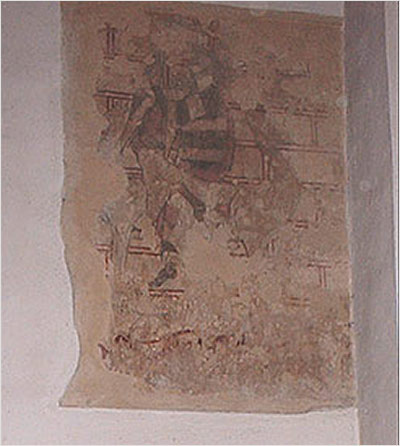
There are a series of valuable mural paintings on the north wall that are exceptionally precious examples of mediaeval art, equal to the best continental work of the period. Though they are much decayed they are highly interesting, representing the martyrdom of St Catherine. Discovered in the 1860’s under many coats of limewash, they have been revealed as belonging to the best period of English mural painting about 1300. Experts consider that the work was done by a master of no mean order. The Saint is seen disputing with pagan philosophers, standing before the enthroned emperor, led away by a gaoler carrying his keys, and again calm and serene amid the wreckage of her spiked wheel, of which fragments have struck off the heads of her torturers. There could be a further final scene showing the burial of the Saint by angels on
These paintings were restored by Professor E W Tristram in 1933 and again by Mrs Eve Baker in 1972 together with the Elizabethan paintings with a generous grant from the Pilgrim Trust. (To read about the process of restoration, click here)
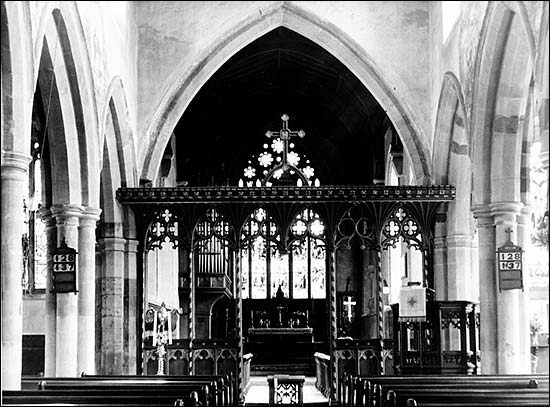
A painting over the chancel arch, probably depicting the Last Judgment, has entirely disappeared. Chancel Screen This rood screen is much restored but is basically 15th century and the present colouring conforms as near as possible with the original.
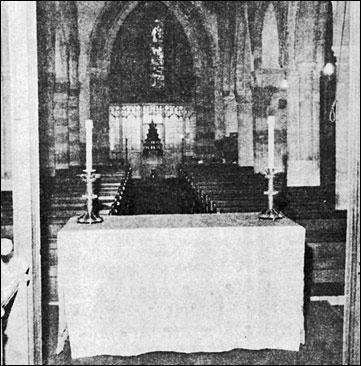
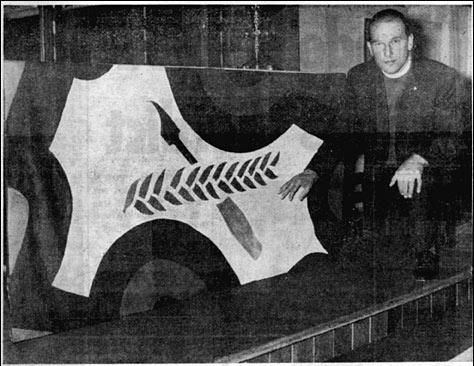
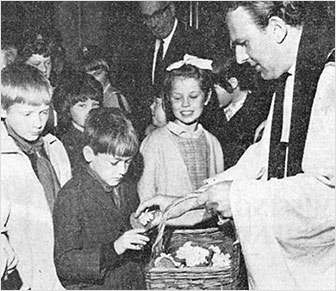
Pulpit and Nave Altar This was removed and a nave altar and its platform were installed in 1969; the platform was later extended in the 1990’s. An altar frontal was provided in 1969 designed to represent local industries – agriculture, a footwear clicker’s knife, a hide of leather and an ear of wheat for cereal manufacturing. Another altar frontal provided at the same time represents creation. (Click here for newspaper article on industrial gifts for harvest)
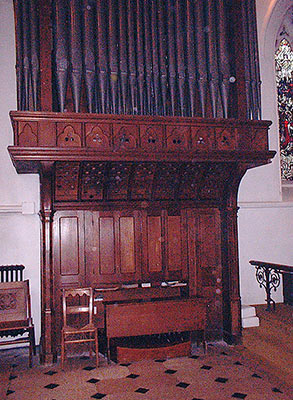
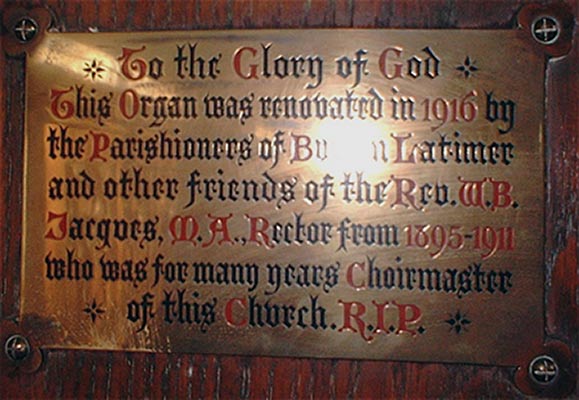
The organ was made by Nicholson and Ward of Walsall in the 1880’s.
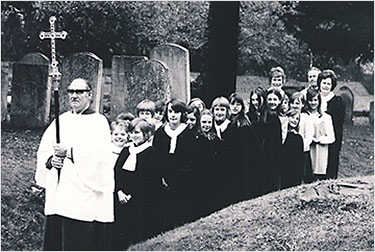
Choir
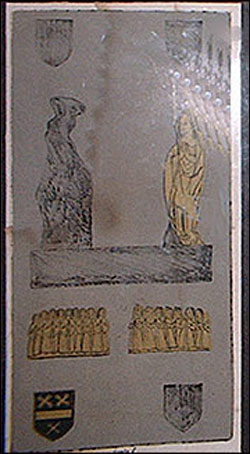
Alms Box By the second pillar near the north door is a beautifully carved Elizabethan poor box with three locks dating from the canon of 1603 which ordered the provision of such alms boxes for the relief of the poor of the parish. Very few of these have survived. Payment for the construction of this box is noted in the Churchwarden's Accounts of 1631 Brasses The oldest brass is of the Boyvill family and is situated between the south arcade and chancel screen. The original stone contained brasses of a man and his wife with eighteen children, nine sons and nine daughters, with shields at the corners and inscriptions. Of these only nine daughters and one shield remain. The memorial is probably to Richard Boyvill and Gresyll his wife who died early in the 16th century.
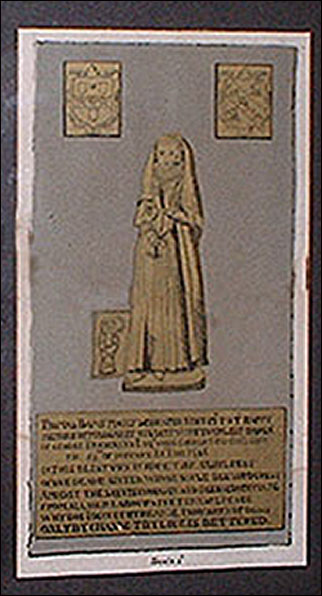
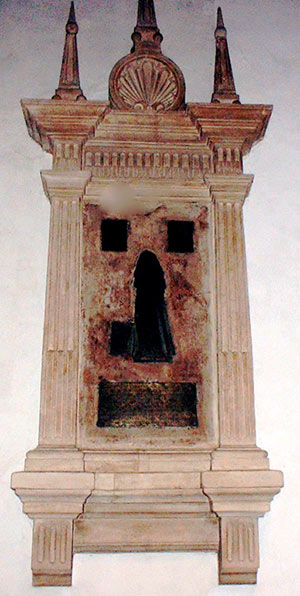
Just inside the chancel is a small portion of another brass, considerably worn, but probably part of the monument to Edmund Bacon who became Lord of the Manor early in the 17th century and built Burton Latimer Hall. He died 4 March 1626 aged 80 years. Tombstones to other members of the Bacon family, former Lords of the Manor, with dates 1642 and 1782, also form part of the chancel floor. The son and heir of Edmund, Thomas, was a vigorous opponent of the levy of ship money during the reign of Charles I. Thomas had married Margaret Franklyn and their daughter, Anna, was baptised in the church on 25 January 1626, but the mother died on 29 January, and on January 30, Margaret Bacon was buried in the chancel. In the south aisle wall is a fine brass enclosed in a stone monument with three pyramids at the top supported by two pillars. It is to Margaret Bacon and her baby. She wears a mantle and her baby lies at her feet in swaddling clothes. The Bacon family continued as Lords of the Manor until 1760 when it was purchased by John Harpur, ancestor of the present owner.
Monuments On the south wall of the chancel is a monument to
On the north wall of the chancel there is a more recent monument to the memory of
In the South Aisle can be found a wooden cross in memory of
Also in the South Aisle there is a black tablet with a cherub’s head to commemorate
The 19th century members of the Harpur family are recorded on the marble tablet in the South Aisle. Oak Chest The fine old oak chest in the chancel is dated 1629 and the initials on the front are probably of the people who made it, John Robinson, a smith, and Thomas Blofield, a carpenter, both noted in the Churchwarden's Accounts as being paid for work in the church around that time. Until 1992 the chest contained parish archives dating back to the 15th century and registers from 1538. The earliest consisted of a parchment scroll twenty-two feet long by six and a half inches wide. Apart from a few missing years during the Civil Wars the registers are complete from 1538. These records are now housed in the County Record Office. Mass Book Another item now deposited at the County Record Office is the priceless possession of a Mass book of the 14th century, beautifully illuminated. It contains prayers for a blessing on the staffs and shields of those about to undertake a duel and for those proposing to go on a pilgrimage, together with a mass for the dead and for marriage. This book would have been lost but for the fact that its pages were used to bind the Churchwardens’ account book for 1559. They have been rebound by the
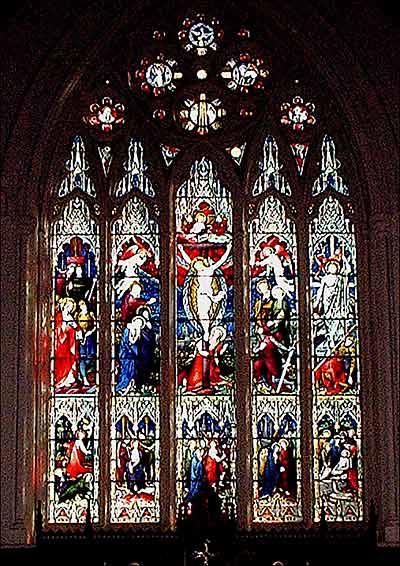
Windows The fine stained glass in the East window was put in to the memory of Hannah Ellen Cross, mother of Mrs Jacques, wife of a former rector, who died 19 December 1896. It was constructed by Hardmans of Birmingham. The main part of the window includes pictures showing The Arrest in the Garden, The Crucifixion, The Resurrection, The Agony in
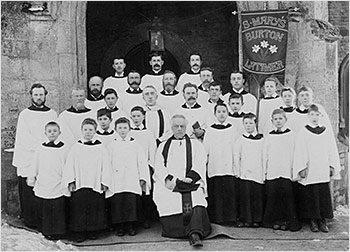
The two windows on the south and north side of the sanctuary were presented by Mrs Jacques as a memorial to her late husband (the Rev W B Jacques 1895-1911) who did so much to add beauty to the church. These windows depict the Old and New Testaments.
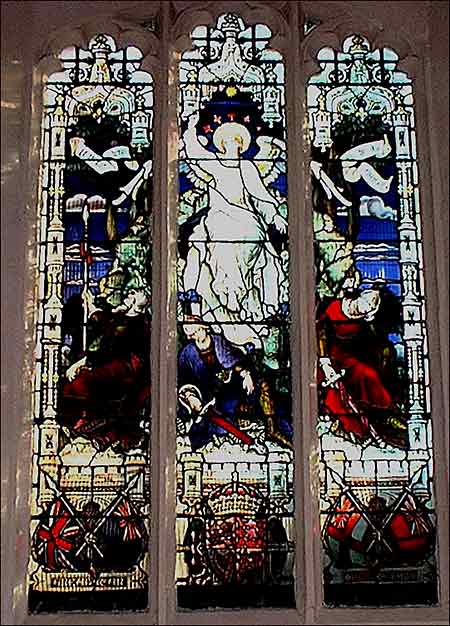
The stained glass window at the east end of the south aisle is a war memorial window to the Great War 1914-18 and shows the royal standard and soldiers asleep at the resurrection. The inscription reads “He is not here for he is risen.”
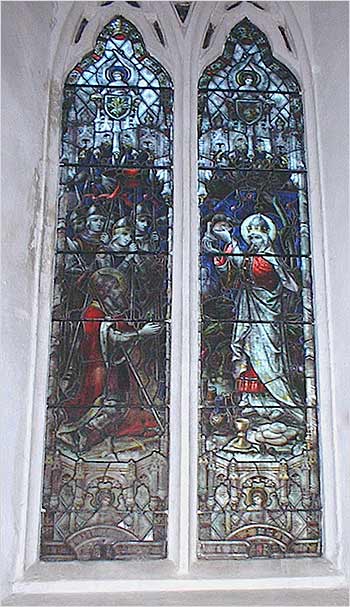
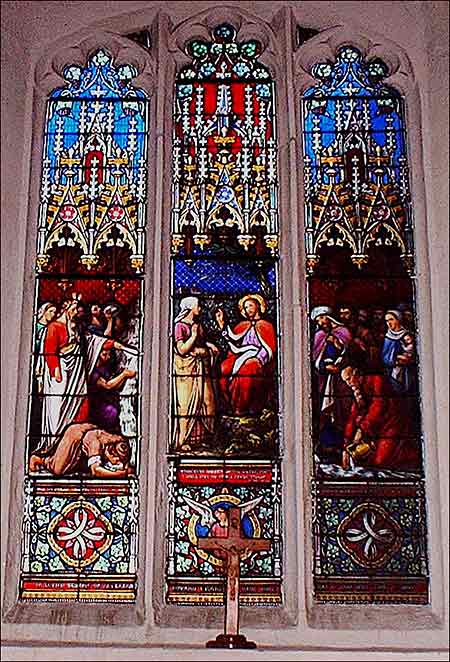
The stained glass window at the east end of the north aisle is dated 1874 and shows Moses striking water from a rock, Christ with the Samarian woman and the Purifying of Elijah with water. It is to the memory of the Rev Edward Craig, curate, who died 17 August 1850. This window is again attributed to Hardmans.
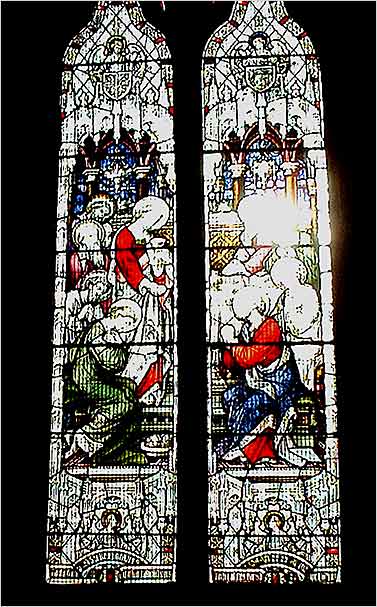
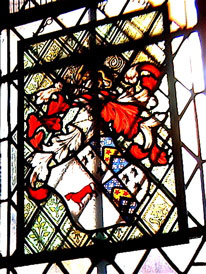
The belfry window is attributed to Clayton & Bell and is dated 1860. It shows the presentation, baptism and the ark. The inscriptions read “This is my beloved son in whom I am well pleased. Mine eyes have seen thy salvation. Noah found grace in the eyes of the Lord.” In the middle window of the south aisle is a piece of armorial glass that came from the staircase window of the old rectory in 1970 and has connections with the Rev David Barclay Bevan who was rector from 1843 –1857.
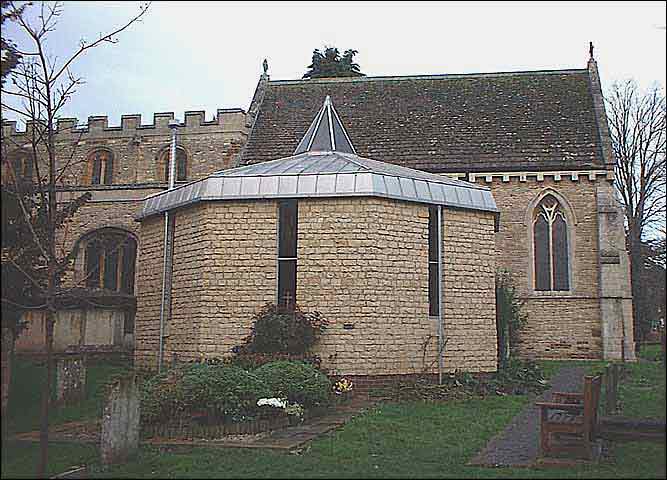
The aisle windows and clerestory windows are 15th century. The clerestory has six windows each of two lights. The first window in the south wall has a curious scooped out section in the window ledge. This is a medieval piscine (basin and drain) which was formerly in the chancel. Chapter House On the south side of the church is the Chapter House constructed from local stone in 1984. It is octagonal in shape and is entered through its internal doors.
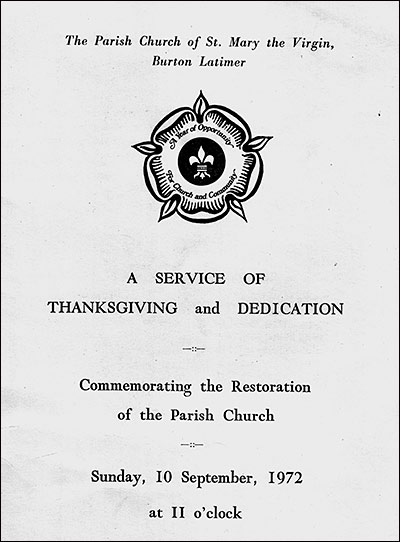
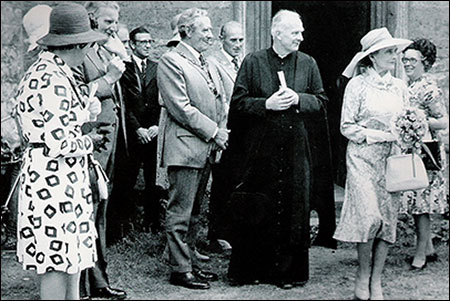
Church Hall To read about a proposed Church Hall extension branded a misfit in 1993 click here. In 1972 a plot of land outside the east end of the church, near the vestry gravestones were removed and the ground levelled and turfed to provide an area to to be used for burial of cremated remains. At a later date a further plot was provided to supplement the original. Proposed Car Park plan for graveyard To read about a proposed plan in 1993 for a car park using graveyard land in Church Lane click here. Memorial Gates Memorial gates were installed at the main entrance to the church. (Click here to read newspaper article) The gates were dedicated to the late Revd R W Sharpley (Click here for details of Revd Sharpley's will) by his brother, Bishop Lamplugh on the 8 September 1972. (Click here to read newspaper article of the ceremony). Click here for funeral of Revd R W Sharpley. On 29 April 1973 a pair of oak gates were dedicated at the side entrance to the church from
Click here for article on memories of past 850 years.
St Mary's Church is point 5 on the Town Trail feature on the site |
|||||||||||||||||||||||||||||||||||||||||||||||||||||||||||||||||||||||||||||||||||||||||
|
|||||||||||||||||||||||||||||||||||||||||||||||||||||||||||||||||||||||||||||||||||||||||